Posts

Post-Mock Interview Reflection

1. How do you feel the interview went overall?  I believe that, overall, my interview went very well. After watching my video, I seemed way more confident than I felt like I was internally. I was able to think quickly on my feet when the interviewer asked questions that caught me off guard or ones that were difficult to answer. I also think I did a great job articulating the message I was trying to communicate and remained calm but professional throughout the entire interview. There were times where I would stumble over my words and struggle to bring my answer back around to what the question was asking. I think this was due to my brain working faster than my mouth could, so I think I can definitely work on slowing down the pace of my talking in future interviews. 2. How did you prepare for the interview? I prepared for this mock interview by viewing the websites that Dr. Lancaster posted, listing some of the common questions from those links, and then brainstorming what I would...
Reflection on Imposter Syndrome

The imposter syndrome is a term referring to the psychological phenomenon where a person doubts his or her personal accomplishments and has a persistent, and often internalized, fear of being exposed as inadequate or a fraud. 70% of people have had an acquaintance with the symptoms of imposter syndrome anytime in their life, and it equally affects men and women. The 4 main symptoms of imposter syndrome, according to Lou Solomon, are anxiety, perfectionism, self-doubt, and fear of failure. These symptoms all contribute to the fact that those experiencing imposter syndrome are convinced that they do not deserve the success that they have earned. Instead, they have begun to believe that their success if due to “luck” or “good timing”. This syndrome can actually become limiting to a person since those living with it are not highly likely to have the full courage go after new opportunities with confidence in their abilities, knowledge, skills, character, and worth. For anyone who is experie...

Reflection on Aging and Sexual Health Lecture

Today in OCP Older Adults class, we learned about aging and sexual health from Jennifer Valli, an AASECT Certified Sex Therapist. It was a very insightful lecture for such a sensitive topic, and I think it was a great opportunity to learn more about it in order to gain a better perspective of OT’s role in this subject. My key takeaways from this lecture were as follows: • It is a myth that older populations are asexual is later life. They do experience a gradual decline in sexual activity, but the majority of healthy people with partners remain sexual into their later years. • Orgasm results in pain relief, stress reduction, and improvements sleep and cognitive functioning in older adults. • Masturbation can have the same affect as practicing mindfulness as it sharpens the mind even when others are not engaged. • During menopause, women’s levels of estrogen, progesterone, and testosterone levels fluctuate, which has a direct impact on their sexual health (i.e., lubrication and ...

Reflection on Driving and Community Mobility Lecture

This past week in OCP Older Adults, we had the chance to hear Cody Stovall, MOT, OTR/L, CDRS lecture on his experience and certification in driving and community mobility. There were several takeaway points from this lecture: A driving program involves a thorough assessment of a person’s performance skills/client factors needed to drive a vehicle. An adaptive driving program has 3 purposes:                1. Assess individuals for safety and potential to drive               2. Evaluate persons with physical disabilities for appropriate AE                3. Train individuals in the use of AE and/or compensation techniques for driving If a person has any additional/modified equipment that did not come with his/her original vehicle, that person must have a restriction placed on his or her license for that. This ensures safety in using that modification while d...

Glyph Reflection

Image
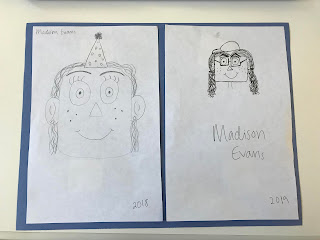
When looking at my glyphs side-by-side that I drew during my first and last semester of class in OT school, I made the following observations:        Differences The first difference I noticed between my two glyphs was that I added glasses to my person. According to the key, this indicates that I now feel that I have had more experience in leadership roles than most other people my age at this point in life. I believe that I made this change due to the fact that I have taken on two leadership roles since being in OT school: Anatomy TA and SOTA Public Relations Chair. I am proud of myself for stepping up and applying for these roles and earning them. Each position taught me so much about the importance of being pro-active, self-directed, organized, and confident in my abilities as a leader. I also noticed that my person's hair transitioned from being only curly to being half straight/half curly. This reflects that I used to see leadership as being solely ab...

Reflection of Nutrition and Aging Lecture

Today in OCP Older Adults, Ashley Ludlow came to talk to us about Aging and Nutrition. I really enjoyed learning from her expertise on diet and nutrition as it relates to aging populations, and my main takeaways from her lecture were as follows: • Nutrition in elderly populations can be addressed through primary, secondary, or tertiary prevention. Primary prevention will aim to slow down the aging process, secondary prevention will aim to slow the progression of a chronic nutrition-related disease, and tertiary prevention involves medical nutrition therapy. • 1 in 8 Americans experience food insecurity and do not have access to foods that support a healthy diet and lifestyle. Those who are food insecure are 30% more likely to experience decline in ADL performance. • Elderly populations are 50% more likely to develop diabetes and 14% more likely to develop hypertension. • Loneliness/social isolation has the same health effect of smoking 15 cigarettes a day. 50% of seniors are consi...

OT 640 Debriefing Video

Level I fieldwork is OVER for our class! My debriefing video for OT 640 can be found at the link below: https://www.youtube.com/watch?v=qfQpONEGWJ0&feature=youtu.be I hope everyone had an incredible fieldwork experience! I can't wait to hear all about your experiences when we return to campus in July. Happy summer!

Media Project: "O-Tee" Peg Board for Harris

Image
        I truly enjoyed the process of constructing an OT intervention with my assigned material for this media project. It definitely challenged me to think like an occupational therapist and to apply all of the knowledge that I've learned thus far in Neurological Aspects (as well as Foundations). My client was Harris, who has a complete SCI injury at T3 and a fractured tibia, fibula, radius, and ulna on his right upper extremity as a result of an auto accident. His right arm is in a full arm cast, therefore his fingers are swelling at all joints in that hand. Harris also has difficulty sitting upright without the assistance of lateral supports in his wheelchair that he now uses. My assigned object was an ice cube tray, and I decided to make a peg board out of the tray, floral foam, and golf tees/balls since Harris loves playing golf. Through reaching over to grab the tees and balls and placing them in their designates spots, Harris will maintain ROM and stre...

Reflection: You're Not You

Image
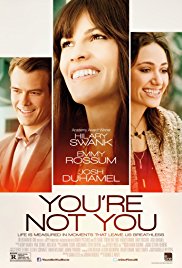
"You're Not You" Swank, H., Greenspan, A., Prince Azim of Brunei, Di Novi, D., Smith, M. (Producers), Wolfe, G. C. (Director). (2014). You're Not You [Motion picture]. United States: Entertainment One Films.     You're Not You tells the story of Kate, a 35-year-old pianist who resides with her husband Evan. The movie begins with Kate playing the piano at her friends' request when her hand begins to shake and, consequently, she misses a few notes. The movie then fast-forwards to one and a half years later. At this point, Kate has been diagnosed with ALS, uses a walker to maneuver her way around her house, and relies on her husband for dressing, toileting, and showering. Kate just recently fired her caregiver due to the fact that she "made her feel like a patient". Therefore, they begin to search for a new person to care for Kate. After interviewing a girl named Bec, Kate decides to hire her, despite Evan's disapproval, solely because she has...

Reflection: Observing Memphis Rolling Grizzlies Practice

       After attending the Memphis Rolling Grizzlies practice this evening, I have reached an entire new level of appreciation and respect for wheelchair users. I had never watched any type of wheelchair sport prior to today, and it was probably one of my favorite experiences that I've had since entering OT school. The first aspect of this team that I noticed was their relationships with one another. As we've talked about in class, a huge component that goes along with spinal cord injuries and many other neurological conditions is the fact that it is tough to maintain friendships and find leisure activities to participate in following an injury or diagnosis. However, it was clearly evident that these men have bonded so much over the past few years of playing this sport alongside each other and have created lifelong friendships. They do not let their disability define them and, instead, use it to grow closer to one another while having fun in the process. I found it v...

Neuro Note on Still Alice

Image
        The movie Still Alice is about a 50-year-old college professor named Alice Howland who slowly begins to experience problems associated with memory loss, such as forgetting certain words in her lectures and conversations and temporarily becoming lost on her runs on campus. She lives with her husband, who is a physician, and has three adult children. Alice goes to her doctor concerning these reoccurring problems and is eventually diagnosed with early onset familial Alzheimer’s disease. She and her husband sit down to tell her children, who then decide to go get genetically tested for this condition. One child ends up testing positive for the gene, one tests negative, and one chooses not to get tested at all. Since being diagnosed, Alice begins to forget recipes, place objects where they do not belong, and forget certain appointments and plans she has made with her husband. At the very beginning, she lists out a few personal questions in her phone that she p...

Inside the O'Briens Reflection

After reading Inside the O’Briens , I not only have a better understanding of what conditions go along with having Huntingdon’s disease but also of how this cruel disease impacts the lives of families. Throughout the book, the reader gets to truly experience the emotions and feelings felt by the members of the O’Brien family and how they change over the process of finding out who has the HD gene. Firstly, I found it interesting that Joe’s mother never told him that she was slowly dying from this disease. However, I imagine she held that information from him simply because she wanted him to be able to live his life without the anxiety and thought-controlling emotions that come with having a parent with HD and wondering if and when to get genetically tested for the gene. I also find it very interesting that everyone thought that his mother “drank herself to death”, only because many symptoms that go along with Huntington’s can seem like someone is intoxicated. This no...